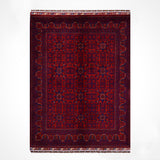
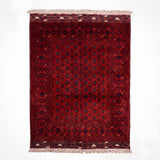
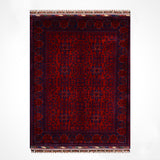
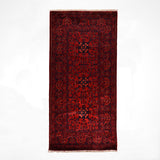
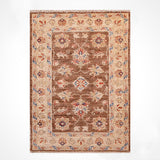
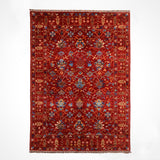

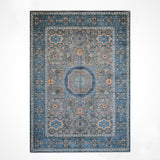
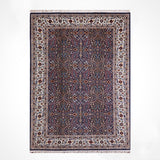

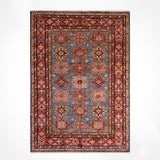
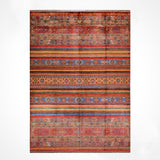
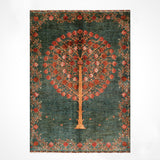
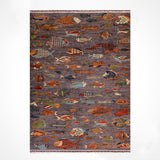
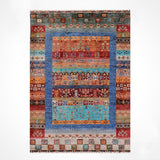
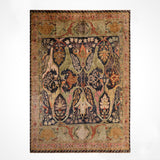

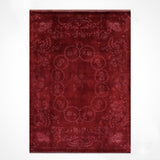
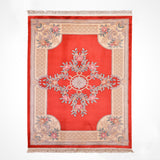


Hereke carpets are unique carpets renowned worldwide for their fine craftsmanship and elegance, reflecting the splendor of Ottoman palaces. As Art Doku Carpet, we keep this unique tradition alive, meticulously weaving each Hereke carpet to add artistic value to your living spaces.
Hereke Rugs


Beyond being an element of home decor, a rug is believed to hold the traces of a centuries-old civilisation, the patience of master hands and the artistic spirit of a nation. The Hereke rug is exactly like that. It is not just a floor covering that keeps your feet warm but an artistic masterpiece that carries the elegance of Ottoman palaces into the present, a symbol of refinement and durability. With a hidden history in every knot and a story in every motif, the Hereke rug is considered one of the most precious jewels of Turkish handcraft and cultural heritage.
The Legacy of the Hereke Imperial Factory
The unique identity of the Hereke rug lies in the founding of the Imperial Factory, a combination of a modern industrial facility and a state-backed vision. This section details how the Hereke rug went from a craft to a world brand.
The Founding of the Imperial Factory (1843-1845)
The story of the Hereke Imperial Factory is closely tied to the Ottoman Empire's efforts at renewal and modernisation. To meet the need for silk upholstery and curtain fabrics for Dolmabahçe Palace and the other palaces under construction, Sultan Abdülmecid decided in 1843 to establish a factory in the town of Hereke on the northern shore of the Gulf of İzmit. The factory officially began production in 1845 as the 'Hereke Imperial Factory' and became the most comprehensive factory the Ottoman State had established in silk weaving at the time.
There was a deep vision behind this initiative. The founding of the factory was not just the opening of a production facility but a continuation of the R&D system, a long-term, state-backed art and industry policy that began at Topkapı Palace in the 1450s. This shows that Hereke rug weaving was more than an ordinary craft: it was a strategic state project bringing together the most talented masters of the time, palace designers, and even jacquard looms and designers brought from France.
A Gateway from the Palaces to the World
The Hereke Factory's fame was not limited to the fabrics it produced for the palaces. Under Sultan Abdülhamid II, rug weaving units were added to the factory, laying the foundations of world-famous Hereke rug weaving. The factory's finest products spread to European courts as gifts to foreign royals, and in the 19th century Hereke rugs furnished many palaces built in Europe.
One of the most important examples of the international prestige these rugs gained was the 1898 visit to Hereke by German Emperor Wilhelm II and his wife Victoria. The Kaiser, hosted in a prefabricated pavilion brought from Yıldız Palace especially for this visit, was presented with many Hereke rugs at the time. These gifts made Hereke rugs a tradition in European courts. The presence of Hereke rugs in the White House's Vermeil Room once again proves the importance of this cultural heritage in universal art.
The Modern Era of Hereke Rug Weaving
The Hereke Factory continued to exist after the Ottoman Empire as well. Operating under Sümerbank in the Republican era, the factory was attached to the National Palaces Administration in 1995 under the privatisation law. This transformation is the clearest proof that the Hereke rug is seen not just as a commercial product but as a cultural heritage to be protected. Still producing today as a 'Museum-Factory', the Hereke Carpet and Silk Weaving Factory is a showcase of Ottoman industry and art. So someone who buys a Hereke rug is investing not so much in an industrial product as in both artistic value and a historic piece that deserves protection.
The Technical and Artistic Excellence of the Hereke Rug
The Hereke rug's worldwide fame comes from its historic heritage as well as the technical and artistic features that make it unique. The product of meticulous handwork in every detail, these rugs are a weaving miracle.
Choosing the material: The Dance of Silk, Wool and Cotton
Authentic Hereke rugs are woven with the finest natural yarns. 100% pure silk, high-quality wool and cotton yarns are used in its production. The choice of yarn directly affects not only the rug's texture and look but also its durability and value.
-
Silk Rugs: Silk is the most precious of yarns. Silk rugs have a dazzling look with their shiny, smooth texture. Because they require more work and time, they are more expensive than wool rugs.
-
Wool Rugs: Hereke rugs made from wool yarns are known for their natural softness and superior durability. Being more resistant to spills and stains makes wool Hereke rugs an ideal choice for everyday use.
-
Cotton: In Hereke rugs, cotton yarns are usually used as warp and weft. This strengthens the rug's basic structure and prevents it from deforming over time.
The clever use and combination of these materials sets Hereke rugs apart from other rugs both aesthetically and functionally.
The World's Most Densely Knotted Rug: The Secret of the Gördes Knot
The most distinctive technical feature of the Hereke rug is the double-knot technique, also known as the Gördes knot. This technique is formed by wrapping the knot around two warp threads, firmly fixing each yarn on the rug's surface to the loom. Compared with the single-knot (Senneh) technique used in Persian rugs, the Gördes knot makes the rug far more durable.
The most important advantage of this technique is that it allows an incredibly high knot density. There are even record-breaking pieces woven in Hereke that hold the title of the world's most densely knotted rug. This high knot density is not just a technical detail; it directly determines the rug's fineness, how detailed the patterns can be and how long the weaving will take. Weaving a Hereke rug can take months, and for a silk rug even years.
The Beauty and Meaning of Natural Dyes
The striking colours of Hereke rugs come from natural dyes. Natural dyes and plant dyeing methods are the most important factors ensuring the permanence and vibrancy of the rug's colours. The use of these natural dyes gives the rug a distinctive depth and refinement. Plant dyes create natural tonal transitions (abrash) that do not deteriorate over time but become even richer. This is one of the most important signs that instantly distinguishes a Hereke rug from synthetic rugs dyed in uniform, factory colours.
The Hereke rug's rich colour palette consists of elegant tones such as deep reds, blues, greens, gold and dusty rose. Each of these colours has a symbolic meaning. For example, red rugs represent energy, love and passion, while blue symbolises peace and calm. The colours of a Hereke rug not only offer a visual feast but also shape the room's atmosphere, bringing a warm, inviting feel.
The Hidden Stories Told by the Motifs
One of the most important elements that turns Hereke rugs into works of art is their unique, original designs created by palace designers. Every motif is not just an ornament but a symbolic expression reflecting a cultural identity, a belief or a story.
One of the most common designs in Hereke rugs is the 'Flower of the Seven Hills' motif, symbolising Istanbul, the city built on seven hills. The tulip is a symbol of love and peace, while the hyacinth represents romantic love. In addition, the white rose means affection, the red rose love and the wild rose longing. In addition, Hereke rugs often feature mythological and natural motifs such as Binbir Çiçek (Thousand and One Flowers), Lalezar, Çeşm-i Bülbül and Zümrüt-ü Anka. Composition layouts in the rugs are also very varied; with medallion, mihrab, geometric and semi-symmetrical compositions, each rug gains its own character. These unique motifs turn Hereke rugs from household items into unique 'works of art'.
The Hereke Rug: An Investment and a Unique Decorative Piece
The Hereke rug is not just a household item but one of the rare works of art that keeps and even increases its value over time. This makes it an important investment both aesthetically and financially.
Factors That Determine the Value of Hereke Rugs
Several main factors determine the price of Hereke rugs:
-
Material: Silk rugs are in a higher price range than wool rugs because they require finer weaving and more delicate work.
-
Age and Condition: Antique or well-preserved old Hereke rugs can sell for higher prices than newly made ones. The prices of antique Hereke silk rugs of historical value in particular can reach very high levels.
-
Size and Pattern: The rug's size and the complexity of its pattern also affect the price.
Hereke rugs are regarded by collectors in the antique rug market as both an aesthetic and a financial investment.
The Place of the Hereke Rug in Decor
The Hereke rug can be used not only in classic, traditional decor but also to create a unique atmosphere in modern spaces. Its eye-catching patterns and vivid colours bring warmth and character to minimalist or industrial designs, creating an unexpected balance. Hereke rugs are not only laid on the floor; they can also be hung on the wall like a painting for decoration. Smaller Hereke rugs, meanwhile, are used for special purposes such as prayer rugs or cushions, giving interiors a unique touch.
More Than a Rug, Brought to Life at Art Doku Halı
The Hereke rug is a unique cultural heritage, a rare union of history, art and craft. Its journey, which began with the sultans' vision, became an artistic masterpiece through the patience and technique of master hands, enriched by the beauty of natural dyes and the mysterious stories of its motifs. Every Hereke rug is not just a product but a bridge from the past to the present, an investment and a priceless heirloom for future generations.
At Art Doku Halı, we are a trusted address that understands the story of these unique rugs and values their authenticity. If you too want to be part of this historic heritage, adorn your home with the unique elegance of a Hereke rug and invest in a work of art, we invite you to explore our rich Hereke rug collection. For questions about our collection you can contact us, share your thoughts in the comments, and follow us to help bring this unique art to a wider audience.
Sort