


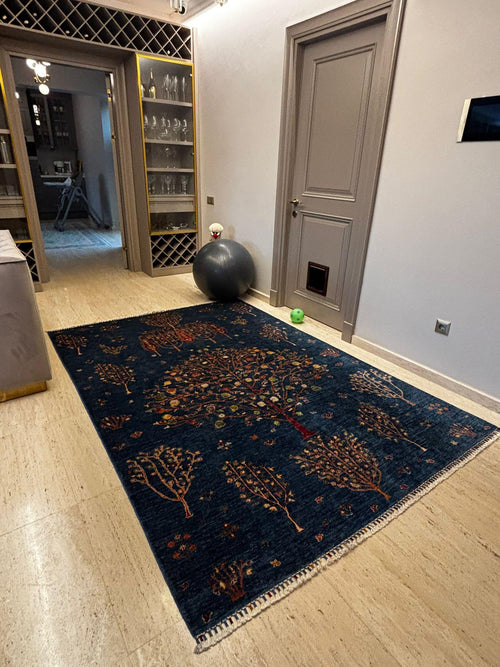
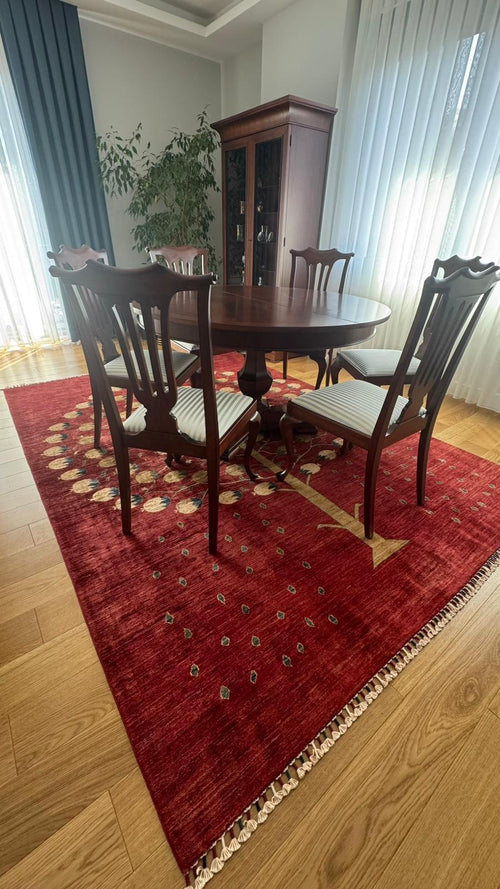
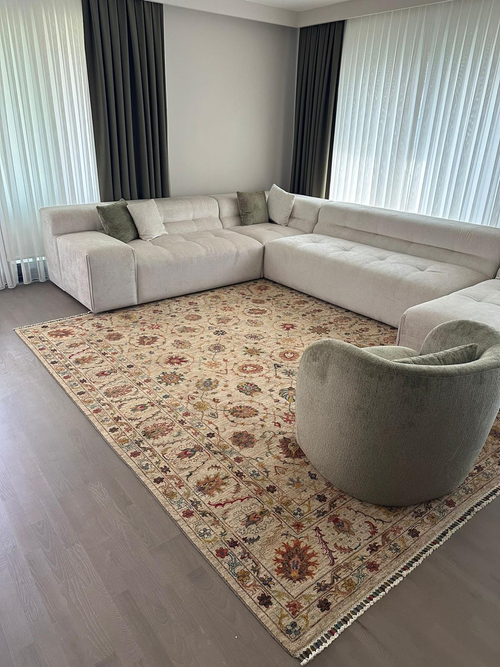
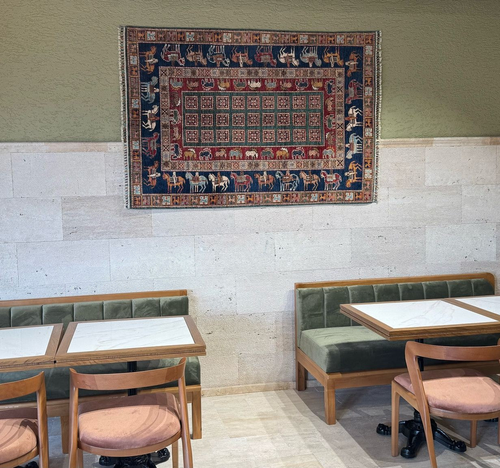
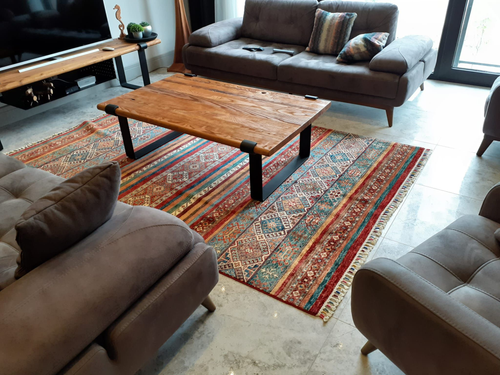
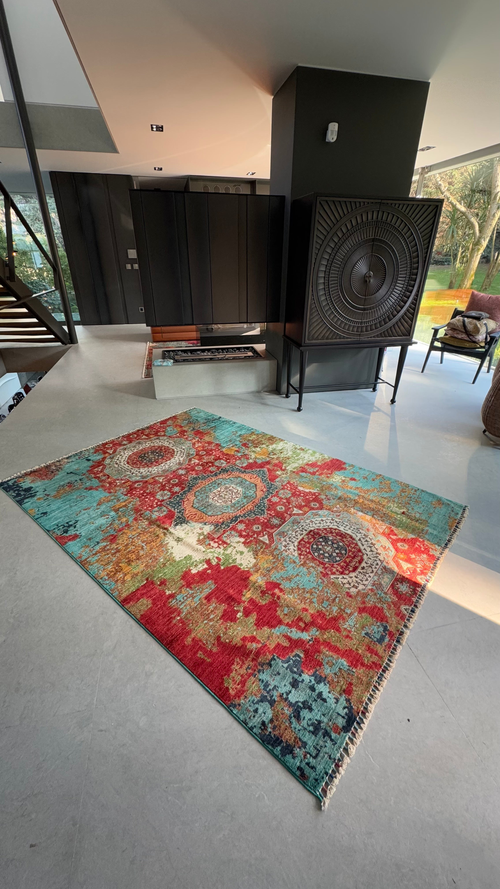
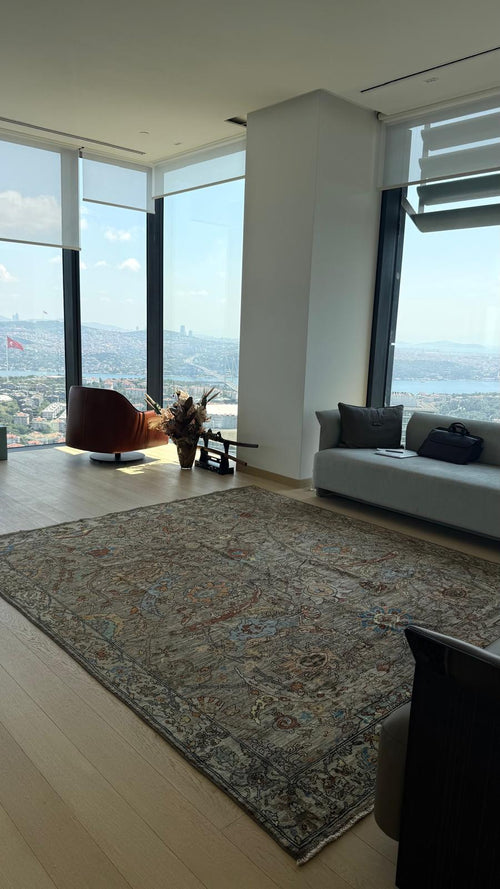
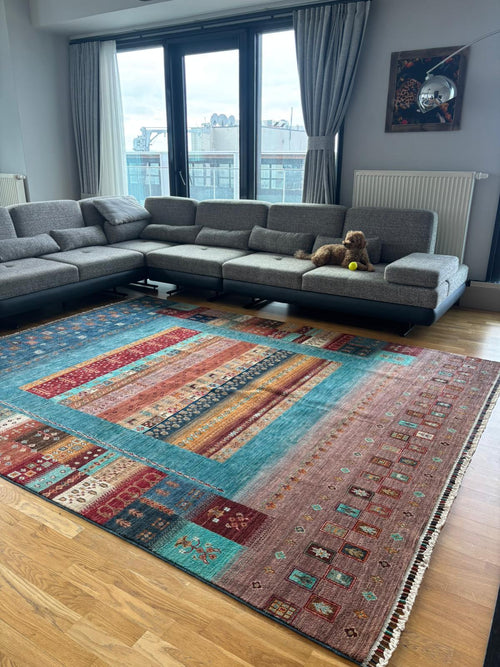
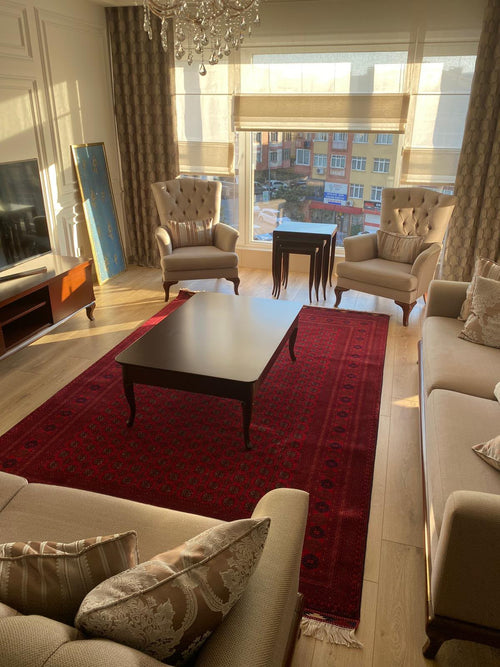
The Persian carpet is a world-renowned work of art, with centuries-old traditions, intricate craftsmanship, and captivating motifs woven knot by knot. Natural wool and silk threads, dyed with plant-based dyes, bring the mystical stories of the East and its rich cultural heritage to life in every pattern. It is not merely a home decoration, but also an elegant investment that appreciates in value over time and is passed down from generation to generation.
IRANIAN CARPETS


For centuries, Persian rugs have transcended mere floor coverings and become symbols of a rich cultural heritage, exquisite craftsmanship, and artistic expression. Each rug is a hand-woven, living work of art, incorporating thousands of years of history, legends, beliefs, and nature. This comprehensive guide delves deeper into this unique art form, beyond a category page dedicated to Art Doku Halı's valuable collection, aiming to inform, inspire, and empower readers to understand why a Persian rug is not just a possession, but also an investment and a story.
Historical Origins of Persian Carpet Weaving
The origins of carpet weaving in Iran date back to the earliest civilizations. Historical evidence suggests that Iranians were among the leading carpet weavers of the ancient world, and that this art has a history dating back more than 2,500 years. During the Achaemenid period (550-330 BC), the carpet was used in palaces not only as a household item but also as a symbol of power and prestige. The first concrete documented evidence of the existence of carpets appears in Chinese records from the Sassanid Dynasty (224-641 AD). The information that Emperor Heraclius returned with a variety of carpets as spoils of war after the conquest of the Sassanid capital Ctesiphon in 628 AD proves that the carpets of this period were already known and valued across a wide geography.
The World's Oldest Carpet: The Legend of the Pazyryk Carpet
The Pazyryk Carpet, one of the most iconic finds in the history of Persian carpet making, was discovered in an ice-covered kurgan in the Altai Mountains of Siberia by Russian archaeologist Sergei Rudenko between 1947 and 1949. Dating back to the 5th century BC, this carpet is the oldest known carpet in the world.
The Pazyryk Carpet measures 1.89 meters by 2 meters and was made with the wool weaving technique. One of the most striking features of the carpet is its knot density, which was considered extraordinary for that period, at approximately 36 knots per square centimeter (3600 knots per square decimeter). The complex motifs, such as riders, moose and mythological griffon figures, reveal the carpet's artistic value and weaving mastery.
Rudenko put forward the theory that this carpet was woven in Iran during the Achaemenid period and exported to the Altai. This approach demonstrates that a carpet can be a product not only of its location but also of its origins and cultural interactions. The Pazyryk Carpet is the strongest evidence that, thousands of years ago, the carpet was not merely a product of local craftsmanship, but also a trade commodity and cultural medium. This demonstrates that the value of Persian carpets is not limited to their aesthetics or craftsmanship; they are also unique in their "historical investment" value.
The Golden Age of Persian Carpet Weaving: The Safavid Dynasty
Persian carpet weaving reached its peak during the Safavid Dynasty, which ruled in the 16th and 17th centuries. During this period, carpet weaving transformed from a rural craft into a national art and an internationally respected art form.
The Safavid shahs, especially Shah Abbas (1587-1629), established royal workshops in cities such as Isfahan, Tabriz, Kashan and Kerman to support carpet weaving. These workshops brought together the finest craftsmen to produce high-quality carpets with intricate and detailed patterns. The Ardabil Carpets, commissioned by Shah Tahmasp and now on display in the Victoria and Albert Museum, are among the most famous examples of artistic and technical excellence from this period.
The artistic transformation during this period initiated a process in which the carpet ceased to be a mere floor covering and became a cultural narrative tool through the stories it carried. Safavid-era carpets were decorated with pictorial and figurative motifs inspired by literary works such as Ferdowsi's Shahnameh or Layla and Majnun , and even Persian miniature art. This demonstrates that the carpet has become a product of cultural transmission that appeals not only to the eye but also to the soul. Shah Abbas's artistic vision has greatly enhanced the aesthetic and commercial value of carpets, marking the pinnacle of carpet art, with approximately 1,500 examples surviving today and preserved in museums worldwide.
The Meeting of Art and Craft: Materials and Techniques
The unique quality and beauty of a Persian carpet lies in the perfect harmony of the materials used and the meticulous techniques applied.
The Heart of a Real Carpet: Yarn and Materials
The main materials used in the production of Persian carpets are wool, silk and cotton. These natural fibers directly affect the texture, durability and visual appeal of the carpet.
-
Wool: The most common material used in carpet weaving. In Iran, local flocks of sheep and goats provide high-quality, durable wool for weaving. While wool yarn gives the carpet a soft and comfortable structure, it also ensures that the patterns appear clearly.
-
Silk: Silk is an expensive and luxurious material and is preferred in high-quality carpets produced in regions such as Kashan, Qom and Isfahan. The natural shine and durability of silk cause the carpet to change color and have a dazzling shine when viewed from different angles under light. Silk pile carpets generally have short pile and an elaborate design.
-
Cotton: It is mostly used in the weft and warp threads that form the skeleton of the carpet. Cotton helps the carpet maintain its strength and form.
Nature's Dance with Art: The Magic of Madder
One of the most important features that distinguishes a genuine Persian carpet from its synthetic imitations is that the colors are made with root dyes obtained from natural sources. While chemical dyes fade and lose their vibrancy over time, carpets colored with root dyes take on a softer and more characteristic tone over time.
The natural sources from which the main colors are obtained are:
-
Red: Red, the most vivid and characteristic color in carpets, is dyed with alizarin, a substance obtained from the ground roots of the madder plant (Rubia tinctorum L.) . Historically, dyes obtained from insects such as Kermes and Cochineal, thought to have been used in the Pazyryk Carpet, are among the important sources of this color.
-
Blue: Blue is one of the most frequently used shades in Persian carpets and is obtained from the indigo plant. Indigo dyeing, unlike other vegetable dyeing methods, requires a complex and laborious fermentation process called "vat dyeing."
-
Yellow: The vibrant yellow color comes from turmeric and some other herbal sources.
To permanently bond these natural colors to the yarn, a process called mordanting is used. Substances containing metal ions, such as alum (aluminum potassium sulphate), increase the permanence and durability of the colour by establishing a bond between the dye and the fibre. This multi-step, meticulous process is another important element that explains why the carpet's artistic and financial value is so high.
Weaving Techniques: Subtleties of Persian and Turkish Knots
One of the key factors determining the value of hand-woven carpets is the knotting technique used. Two main knotting techniques are prominent in Persian carpet weaving: the Persian (Sineh) knot and the Turkish (Gördes) knot.
-
Persian Knot (Sineh): The loop is wrapped around only one warp wire, leaving the other end free. This technique increases the number of knots per square metre, making it ideal for weaving particularly complex and finely detailed patterns. This knot gives the carpet a more elegant and fine texture.
-
Turkish Knot (Gördes): The loop is tied by wrapping it around both warp wires. This technique creates a more solid and durable structure and is generally preferred for weaving larger motifs.
Which knotting technique is more valuable is a controversial topic. Some sources consider the Turkish knot more acceptable because it is more difficult and time-consuming. The Persian knot stands out for its fine craftsmanship and capacity for detail. This is not a matter of superiority, but rather a matter of purposeful preference. The value of a carpet depends not on the knot used, but on how well it serves its purpose: whether it will be a finely detailed work of art (Persian knot) or a durable legacy to be passed down from generation to generation (Turkish knot). This approach reveals that each carpet has its own unique value and story.
The Secret Language of Patterns and Colors
Each motif and color in Persian rugs is more than just a random ornament. They are elements of a secret language that carries deep cultural codes, legends, beliefs, and emotions. The weavers of the carpet transfer these stories to the canvas with threads, just like a painter.
Meanings of Persian Carpet Motifs
Each motif used in the carpet carries a symbolic meaning that reflects the spirit of the geography and period in which it was woven.
-
Tree of Life: This motif, frequently seen in Persian carpets, represents immortality and belief in life after death, while also symbolizing the beauty and happiness of life lived.
-
Boteh Motif: This abstract leaf shape, meaning "bush," "bunch of leaves," or "cluster of brushwood" in Persian, is used particularly in Kerman and Kashan carpets and symbolizes fertility and the cycle of life.
-
Medallion Form: This centripetal motif reflects symmetry, cosmic order, and the search for the center of the universe. It is particularly popular in Tabriz carpets.
-
Animal Figures: The animal figures on the carpet represent qualities inherent to the animal's nature. For example, the lion symbolizes power and strength, and the bird symbolizes freedom and spirituality.
-
Other Motifs: The triangular-shaped "Eye" and "Hook" motifs, similar to evil eye beads, are used for protection against evil spirits and the evil eye, while the "Waterway" motif symbolizes the importance of water and abundance, and the "Chest" motif symbolizes a young girl's desire to get married.
Color Symbolism in Persian Carpets
Persian rugs are known for their rich and vibrant color palettes. These colors not only serve an aesthetic purpose, but also carry deep cultural and spiritual meanings.
-
Red : Representing vitality, love, energy and passion, red is also a symbol of courage, strength and lust. It is usually used as the main background color of the carpet and creates a very striking effect.
-
Blue: Representing the sky, infinity, and freedom, blue appears in carpets as a symbol of peace and spiritual depth. It is frequently combined with natural motifs such as water and sky.
-
Green: Symbolizes the revival of nature, abundance, and hope. Green, which holds a significant place in Islamic culture, also represents paradise and peace.
-
Beige and Brown: Symbolizing a connection to the earth and the integrity of nature, these colors play a significant role in adding a warm, natural atmosphere to the rug.
The combination of these colors and motifs transforms the rug from a simple decorative object into a tool that transforms the energy and emotional atmosphere of a space. These rugs nourish not only the eye but also the soul. This profound narrative justifies the rug's value not only in terms of material and craftsmanship, but also in terms of its spiritual and cultural depth.
Famous Iranian Carpet Centers
Persian rugs are named after the region where they are woven, and each region has its own characteristics such as patterns, materials, knot density and color palette. These regional differences give each carpet a unique identity and story.
-
Tabriz Carpets: The city of Tabriz is known for its fine and detailed patterns that combine both floral and geometric motifs. Tabriz carpets, woven with high knot density (more than 490,000 knots per square meter) and silk-wool blend materials, have a silky sheen and show tonal transitions depending on the angle of the light. However, machine-made carpets under the name "Tabriz" can also be found in the market. This makes it crucial to highlight the unique characteristics of authentic hand-woven Tabriz carpets—high knots, natural materials, and the millimetric asymmetry inherent to handmade—a critical step in gaining consumer trust and ensuring they understand the true value of the product.
-
Isfahan Carpets: Produced in central Iran, Isfahan carpets are among the most elegant carpets with their fine workmanship and exceptionally high knot density (close to 1 million per square meter). It usually features detailed plant motifs, bird figures and rich colors (blue, red, beige) around a central medallion pattern.
-
Qom Carpets (Qom): The city of Qom is famous worldwide for its carpets, especially those woven from pure silk. These carpets are very tightly woven with a knot density of up to 1 million per square metre and exhibit an elegant appearance with geometric or rounded patterns. Coloured using root dyes, Kum carpets are generally dominated by cream, red and navy blue tones.
-
Kirman Carpets: Woven from lamb's wool with a tight and high pile, Kirman carpets are decorated with mixed flowers and small motifs called "Oriental patterns".
-
Herat Carpets: These carpets are tightly woven with fine threads, yet have soft and bright colors. Date palm and pear patterns are common, while deep reds and blues predominate.
-
Gabbeh Rugs: Meaning "rough" or "natural" in Persian, gabbehs have fewer knots and a longer pile than other types of rugs. Known for their simple, geometric, and abstract patterns, these rugs gained popularity, particularly in Europe and America, after the 1970s. Gabbehs show that Persian carpet making was not limited to magnificent palace-type carpets, but was also a rich part of nomadic and rural tradition.
A Guide to Identifying a Genuine Persian Rug
Buying a Persian rug is investing in a work of art, not just a decorative object. Therefore, it is of great importance to know some basic criteria to distinguish a genuine carpet from its imitations and to preserve its value.
How to Identify an Original Persian Rug?
Here are some practical ways to distinguish a genuine hand-woven Persian rug from a synthetic or machine-made rug:
-
Symmetry and Imperfections: Machine-made rugs have perfect symmetry, whereas hand-woven rugs, due to the weaver's hand, may have millimetric variations, slight curvatures, or pattern deviations. This "perfectly imperfect" structure is proof that the carpet is handmade and carries the symbolism of an ancient Persian belief that only God can create perfection. These small imperfections are like a unique fingerprint of the carpet.
-
Fringes: The fringes of genuine hand-woven rugs are a continuation of the warp threads and are integral to the rug itself. Fringes that have been sewn or glued on later are an indication that the rug is not genuine.
-
Smell Test: A genuine Persian rug is made from natural materials, so it doesn't have any synthetic odors. Instead, it has the faint, characteristic scent of natural wool.
-
Material Control: The back surface of the carpet should be examined and the type of material used should be checked. While original carpets are made from cotton, wool and silk, imitations may use synthetic fibers (such as polyester and polypropylene) to reduce costs.
-
Permanence of Dye: Real Persian carpets do not bleed or fade because they are colored with vegetable root dyes. To test this, wipe a small corner of the carpet with a damp cloth. If the color bleeds, this is a sign of chemical dye use and may not be genuine.
A Work of Art That Adds Value to Your Living Space
With their aesthetic appeal, deep cultural stories, and exquisite craftsmanship, Persian rugs are far more than just household items. Carrying the traces of thousands of years of heritage in each knot, these rugs add a noble presence, warmth, and depth to any space they are woven in. Their high price reflects not only the yarns used and the craftsmanship invested, but also the spiritual and cultural value they carry.
At Art Doku Halı, we aim to preserve this unique heritage and offer you the most authentic, highest-quality Persian rugs. More than just a corner ornament, each rug in our collection has the potential to add a work of art, a story, and a valuable legacy to be passed down from generation to generation. You are invited to discover these timeless beauties and make your home a part of history and art.


