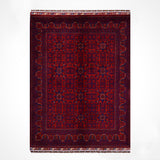
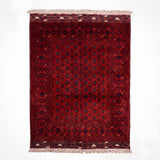
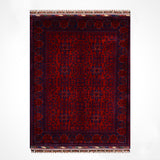
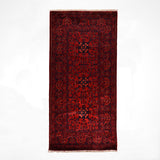
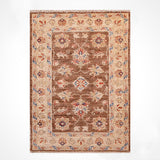
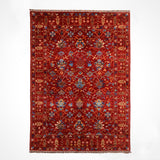

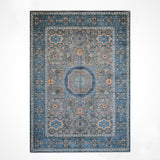
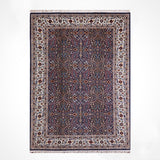

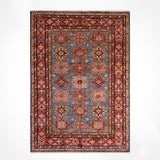
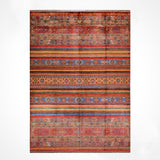
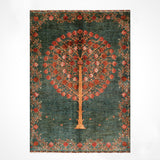
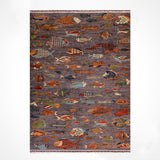
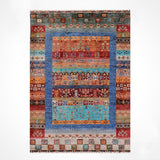
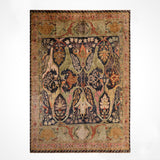

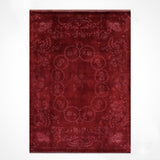
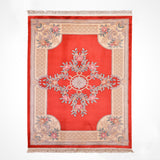


Classic Patterned Carpets offer a timeless elegance with their traditional motifs and strong details. Inspired by the deep-rooted carpet weaving heritage of Anatolia, these carpets are an ideal choice for those who want to create both a warm and magnificent atmosphere.
Classic-Pattern Rugs


When you choose a rug for your floor, you are not just choosing a decorative item. A story, a culture and perhaps one to be handed down through generations a work of art into your living space. This is exactly where classic-pattern rugs stand apart from all other options. So why, when minimalism and simplicity dominate modern living spaces, are these traditional weavings with thousands of years of history still indispensable? The answer lies in the deep meaning hidden in every knot, the warmth of the human hand and an aesthetic value that defies time. In this article we will journey into the fascinating world of classic-pattern rugs and discover that they are not just floor coverings but storytelling tools and carriers of cultural heritage.
A Journey Through the Knots of Time: The Origins of Classic Rug Weaving
The traces of rug weaving go back to the earliest stages of humanity's journey of civilisation. The first examples emerged to protect and beautify the cold steppe lands and nomadic tents. This practical beginning turned into an incredible art form over time. Ancient civilisations, wove their own belief systems, social structures and relationship with nature into every rug they made. For example, the animal motifs seen in early rugs in Central Asia were not just ornaments but a symbolic expression of totemic beliefs and a hunter-gatherer past.
Those who played the most critical role in the development of this art The Silk Road, took rugs beyond being a trade commodity. This ancient trade network thousands of kilometres long allowed patterns, techniques and ideas to flow between continents. A Chinese dragon motif could be stylised in Iran and woven in Anatolia with a new meaning. In this process the rug gradually became an increasingly valuable status symbol. In European palaces and churches, rare Oriental rugs were among the most important objects showing their owner's wealth and culture. This cross-cultural interaction allowed classic rug weaving to develop a universal language; each region added a brick to this rich mosaic with its own local colours and interpretation.
The Mysterious Language of Symbols: Every Motif Has a Story
The most fundamental feature that separates a classic rug from an ordinary decorative item is that every element on it is deliberate and meaningful. These patterns are not randomly chosen ornaments but an abstracted alphabet, wall paintings or prayer rugs function like. Patterns are usually divided into two main groups: geometric and naturalistic (stylised plant and animal) forms.
Geometric motifs, represent order, balance and the mathematical harmony of the universe. The eight-pointed star motif common in Turkish rugs is not just an aesthetic shape. In Islamic art this motif symbolises paradise and eternity. Squares tell of the four corners of the world; interlocking triangles tell of the harmony of elements such as water, earth and fire. These motifs, usually part of a larger composition and repeated in the borders or at certain points of the field, give the rug both a visual rhythm and a deep philosophical subtext.
Ornaments inspired by nature reflect the organic bond humans form with nature. Motifs such as the tulip, carnation, hyacinth and pomegranate flower take the leading role, especially in classic Ottoman rugs. The tulip symbolises God, while the pomegranate represents fertility and abundance. The 'tree of life' motif is a universal symbol reaching into the past with its roots, the present with its trunk and the future with its branches. These motifs pay tribute to nature's endless cycle and humanity's place within it. Every flower, leaf or branching tree is proof that the weaver transferred their observations of nature and emotional bond with it into the knots.
Anatolia's Weaving Map: Türkiye's Unique Heritage
Türkiye lies at the heart of the world's classic rug-weaving heritage. Anatolia has been home to countless rug-weaving centres, each developing its own pattern, colours and weaving technique. This richness comes from settled and nomadic cultures, trade routes and empires crossing these lands for thousands of years. Anatolian rugs, are highly personal, heartfelt expressions usually passed on by village and town women through oral tradition and personal creativity.
One of the best-known and most precious representatives of this tradition are Hereke rugs. First woven especially for the palace in the Ottoman Empire's age of splendour, Hereke rugs are known for their fine silk or wool yarns and high knot count. Their patterns are dominated by elegant, symmetrical compositions inspired by Ottoman architecture, tile and illumination arts. A Hereke rug is not just a floor covering but a work of very high artistic value, worked like a miniature painting on a wall.
On the other hand, Ushak rugs has a completely different character. They are known for their wide borders and large, striking medallions. Because they were often depicted in the paintings of Renaissance artists in Europe, they became the first model that came to mind in the Western world when people said 'Turkish rug'. Deep reds, navies and ivory tones dominate Ushak rugs. Ladik rugs are known for their prayer-rug format, vivid red and green colours, and stylised tulip and hyacinth motifs. Milas rugs reflect the warm, simple aesthetic of the Aegean with softer earth tones (beige, brown, olive green) and more abstract geometric forms. Each region weaves the story of its own geography, culture and history in patterns found nowhere else.
The Foundation of Quality: The Importance of Materials and Colours
If a classic rug's soul is in its patterns, its body is in the materials used. Traditional weaving relies on nature's purest and most durable products. Wool, are the backbone of classic rug weaving. High-quality wool (usually from specific parts of the sheep) offers both softness and exceptional durability. Thanks to its moisture-absorbing property, it keeps the room cool in summer and warm in winter. In addition, its natural oil content gives the rug a sheen and rich patina over time.
Silk are a symbol of luxury and splendour. The very fine structure of silk yarn allows the weaver to work with incredible detail and nuance. That is why the most complex and delicate patterns usually come to life in silk rugs. The way it reflects light gives the patterns an almost three-dimensional depth and vitality. A silk Hereke rug looks different from different angles under light, which makes it dynamic and captivating.
Colours are the most captivating element of this art. Unlike industrial dyes, the natural dyes, are obtained from plant roots, leaves, bark, insects and minerals. Brown from walnut husk, navy from the indigo plant, red from madder, yellow from saffron... These dyes not only create eye-catching tones but also do not fade over time, taking on a characterful, warm look. Every colour tone has a meaning too: Red symbolises life force and protection, blue eternity and peace, green paradise and rebirth, and yellow wisdom and sacred light. This colour palette also sets the emotional tone of the story the rug tells.
Timeless Harmony in Modern Spaces: Masterful Use in Decor
It would be a big mistake to think a classic rug belongs only in a traditional home furnished with antique furniture. On the contrary, when chosen well, to a modern, minimalist space it an unexpected depth of character, warmth and a spiritual dimension can bring. The key is to strike contrast and balance.
An Ushak rug in rich red and navy tones laid in the middle of a living room with a modern, plain-coloured, flat-weave sofa will instantly bring the room a focal point and dramatic energy. The rug's intricate patterns will stand out like a work of art against its minimal surroundings. Similarly, in an industrial-style loft, a small geometric prayer rug hung on the wall like an abstract painting will add personality and handmade warmth.
One of the tricks of using a classic rug in decor is to take one or two colours from the rug and repeat them in the room's other accessories (cushions, throws, vases). This connects the rug to the space and creates harmony. Also, since classic rugs usually have rich, dark colours, it is important to lay them on a light-coloured floor so the patterns stand out even more. A classic rug can be used not only as a floor covering but also as a wall hanging. This is a perfect way to protect a particularly valuable, historic piece while displaying it like a work of art.
Keeping Tradition Alive with Art Doku Halı
Choosing classic-pattern rugs is not following a passing trend but investing in lasting value, the creativity of the human hand and cultural memory. Carrying this ancient art into the future is possible not just by preserving its patterns and techniques but by making them part of contemporary life. Acting with exactly this mission, Art Doku Halı pays tribute to this ancient tradition and brings it into modern homes.
Art Doku Halı's approach is not just to sell a rug but to offer a story and a feeling. It combines 40 years of experience in the trade with a passion for understanding the cultural context behind each rug and passing it on to its customers. Every classic rug here has been carefully selected and assessed not only for its aesthetic quality but also for traditional weaving standards and the use of quality materials. With its wide stock, the company offers a classic masterpiece for every taste and space, from the refined splendour of Hereke to the bold expression of Ushak, from the warm charm of Ladik to the calm tones of Milas.
With free shipping and a customer-focused approach, Art Doku Halı brings these precious pieces safely to your door and, after the sale, guides you on care and protection to extend your rug's life. When you buy a classic rug from Art Doku Halı, you are getting not just a decorative item but a timeless piece that will become a family heirloom and remind you, every day you step on it, of the wisdom of the past, the beauty of art and the warmth of weaving. To discover these works of art that will not only cover your floor but also weave your soul, browse the classic-pattern rug collection and give your home the spirit it deserves.
Sort