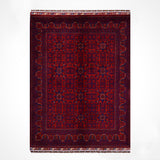
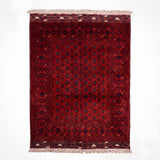
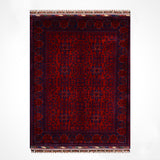
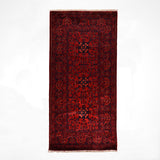
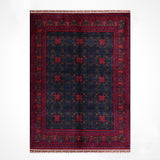
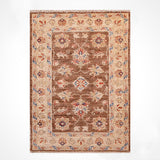
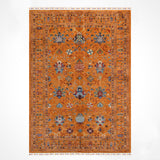

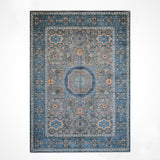
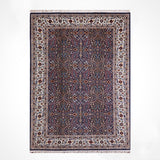

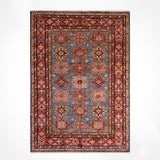
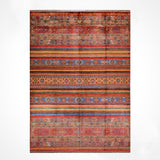
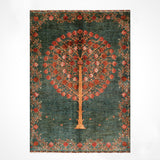

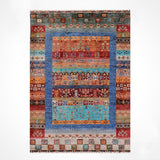
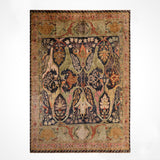

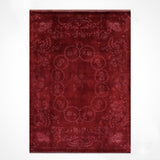
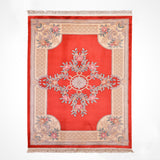


Colored with natural plant-based dyes, root-dyed rugs stand out for being both healthy and featuring colors that defy time. Woven using traditional methods, these rugs add a warm and authentic character to spaces with their genuine textures and natural tones.
Natural-Dyed Rugs


Many people thinking of buying a rug for their home have recently come across the term natural-dyed rug. So what is a natural-dyed rug and why is it so special? The natural dyes used in hand-knotted rugs take their name from being obtained from natural sources such as plant roots. In this article we take an expert look at what natural-dyed rugs mean, why they are valuable and how they make a difference in home decor. Covering the advantages of natural dyes, how they differ from synthetic dyes, their historical importance and care tips for these rugs, we aim to offer a comprehensive guide for both buyers and decor enthusiasts.
What Is a Natural-Dyed Rug?
A natural-dyed rug is a rug made by traditional hand-knotting whose yarns are coloured with natural plant dyes. These dyes are usually obtained from plant roots, leaves, bark or seeds. Rugs woven by this method, practised in Anatolia for centuries, take their colour from pigments from nature instead of chemical dyes. The resulting rug is an eco-friendly, healthy and authentic product.
In hand-knotted natural-dyed rugs, every knot reflects the weaver's labour and the spirit of the natural materials used. Thanks to natural dyes, the rug's colours have a soft vibrancy rather than looking overly bright or artificial. At first glance these rugs catch the eye with their warm, natural and vivid tones. What's more, plant dyes applied to quality wool take on a look that gains value over the years; rather than fading, the colours soften slightly to form a patina that adds character to the rug. In short, natural-dyed rugs are a perfect synthesis of naturalness and craft, in both production and final appearance.
The Natural Dye Tradition in Rug Weaving
People have used nature to colour fabrics and yarns for thousands of years. The arrival of modern chemical dyes in our lives is fairly recent: The first synthetic aniline dye was discovered in 1856. Before then, rug yarns were coloured with dyes obtained from organic plants, fruits, roots and even insects. From Ottoman to Persian rugs and from Central Asia to Anatolia, natural dyes were the most important colour source in all traditional rug-weaving centres for centuries. Because the plants native to each region's geography determine the colour palette of its rugs, the colours in old rugs often carry clues revealing the rug's region and period.
Although the invention of synthetic dyes at the end of the 19th century revolutionised rug production and gave makers brighter, faster results, these artificial dyes also had some negative effects on traditional rug culture. Because early synthetic dyes did not have enough light-fastness, bright purples could turn grey or reds could run and fade over time. The premature fading of chemical dyes and the damage to patterns in some rugs made in this period went on record as undesirable among rug collectors. Indeed, although modern synthetic dyes developed after the 1920s became more resistant to light and washing, this time the depth and warmth of natural dyes were missing from these new dyes.
Today rug weaving is seeing something of a comeback. In the last few decades, quality and authentic rug makers in particular have rediscovered and begun using natural dyes. In Türkiye too, some regional projects and cooperatives are reviving the plant-dye tradition, producing rugs that are both environmentally conscious and traditional-looking. This has made it possible to find the unique natural colours once seen only in antique rugs in newly woven rugs as well.
In short, the natural dye tradition in rug weaving is a heritage with very deep historical roots. Despite the artificial options of the modern age, the elegance and permanence of nature's colours in rugs are still considered indispensable. As present-day representatives of this ancient tradition, natural-dyed rugs build a colourful bridge between past and present.
Differences Between Natural and Synthetic Dyes
Whether a rug is naturally dyed makes important differences in both looks and use. We can sum up the main differences between natural dye (plant-based dye) and synthetic dye, and the advantages of natural-dyed rugs, as follows:
-
Healthy and Eco-Friendly: Because they come from plants or other organic sources, natural dyes contain no toxic chemicals. In the production of synthetic dyes, heavy metals such as lead and chromium or some carcinogenic chemicals may be used. Natural-dyed rugs are safer for both their makers (weavers) and their users. People with children or pets at home want to be sure the rug contains no harmful substances; here natural dyes offer a big advantage. Plant dyeing processes also protect the environment, as they leave no waste or toxins in nature, unlike chemical dyes.
-
Vivid, Beautiful Colour Quality: Yarns dyed with natural dyes produce colours in rugs that are saturated but easy on the eye. The colour spectrum of natural dyes is not a single tone but contains small nuances. For example, the red from the madder plant actually contains slight blue and yellow reflections; though our eye perceives it as red, the undertones make the colour look extremely rich and deep. This applies to all natural colours: Because every natural dye carries traces of all the main colours, different colours placed side by side form a harmony. Synthetic dyes, on the other hand, are produced in the lab as monochrome (close to a single wavelength), so when more than one bright synthetic colour is used in a rug the result can sometimes look too sharp or 'artificial'. An expert eye can tell the slight glow and vibrancy of naturally dyed rugs from the flatter, duller look of synthetically dyed rugs.
-
How Colours Behave Over Time: Both naturally and synthetically dyed rugs can fade over time depending on sunlight or use. But there is an important difference here: As natural dyes fade, the colours just soften within their own tone, giving the rug an elegance that comes with the years. As the rug ages and gets light, natural-dyed colours turn into a pastel version of their original tone; this is called the patina effect. For example, a bright natural red becomes slightly matte years later but remains in reddish earth tones. Synthetic dyes, while usually not so light-sensitive (especially modern quality ones), may change tone or take on an unpleasant look when they start to fade. For instance, an artificial aniline-based navy may turn greyish blue as it sees sun, or an orange synthetic colour may fade to a dull beige. As often seen in old rugs, a fuchsia-pink synthetic dye can turn pale orange or brownish years later; vivid green synthetic tones can leave yellowish residues when they fade. Unexpected colour changes like these rarely happen in naturally dyed rugs; the colour simply evolves into a paler version of itself. So a well-aged natural-dyed rug keeps its good looks even years later. Of course neither natural nor synthetic dye is completely unaffected by the sun; any rug in direct sun will fade over time. But in a naturally dyed rug this fading is balanced and pleasing to the eye. Still, it is a good idea to rotate your rug or use it in different positions at regular intervals so that every part fades evenly and slowly. (For example, turning the rug end to end every 6 months stops the same area getting constant sun.)
-
Resistance to Stains and Washing: When natural dyes are properly fixed to wool (by mordanting), they become very resistant to water and washing. In a good natural-dyed rug, colours don't easily run or mix when washed. Indeed, as seen in many antique rugs, natural-dyed colours can stay vivid for more than a century. When synthetic dyes were first discovered and used, some red dyes were seen to run so much when washed that they turned the rug completely pink and white. Although this problem has largely been solved in today's synthetic dyes, there is always a chance of a chemically dyed rug bleeding colour in its first wash. This risk is usually lower in naturally dyed rugs, because the dyeing process is longer and more careful, letting the dye penetrate the wool thoroughly. Still, the best way to tell a rug's colourfastness is to wipe a hidden corner with a small damp cloth and see if any colour comes off. Natural-dyed rugs usually pass this test.
-
Texture and Sheen: In natural-dyed rugs, not only the dye but usually the wool yarns themselves are carefully prepared. The combination of hand-spun yarn and natural dye can produce slight colour undulations in the rug called abrash. These undulations mean the colours are full of small tonal transitions rather than perfectly flat as in machine-made rugs. As a result, when you look at the rug, the colours appear not as a flat block but as a lightly shaded vibrancy. This effect makes the rug shine at different light angles and gain depth. In synthetically dyed, factory-made rugs, the yarns are mostly factory-made too, so no such variation is seen; the colours remain flatter and more uniform. That handmade feel in naturally dyed rugs is a richness contributed by both the weaving technique and the dye.
-
Collector and Investment Value: Hand-knotted natural-dyed rugs are not just decorative items but part of a cultural heritage. So their collector's value may rise over time. Antique natural-dyed rugs with rare motifs or from a particular region in particular find buyers among collectors at high prices. The settled look of colours obtained from natural dyes over the years gives the rug the value of an antique painting. Even today rug lovers place great importance on whether a rug is naturally dyed, because it is a sign of the rug's handmade authenticity and limited numbers. Even in newly made rugs, if yarn dyed with natural dyes is used, these rugs can sell for around 20-30% more on the market. The reason is that natural dyeing is a laborious and costly process, and the resulting rug is of the highest standard in beauty and durability. In short, money invested in a natural-dyed rug can pay off in the long run; such a rug carries value that can be passed down through generations.
Given the differences above, it can be said that natural-dyed rugs are not just a decorative element but also a healthy, eco-friendly and artistic choice. Although synthetic dyes have practical benefits in their own field (more colour options, lower cost), traditional natural dyes emerge as the best natural and cultural choice for rugs.
Sources of Natural Dyes and the Colours in Rugs
Behind the natural dyes that give a rug its colour lies a true treasure of nature. Different plants and natural materials have been used to produce beautiful colour tones. Here are some of the natural dye sources most used in traditional rug weaving and the colours they give:
-
Red and Pink Tones: In Anatolia, dye plant usually brings to mind madder root. Also known as dyer's madder, this plant root gives yarns tones such as vivid red, dusty rose and peach pink. Reds from madder root lean towards orange-red, while cochineal, another natural red source, gives a much deeper, fuller red (close to burgundy, in morello cherry tones). Especially in Ottoman and Persian rugs, these two sources have been the crown of reds for centuries. Through Silk Road trade, cochineal dye from Mexico and India created 'fire red' tones in rugs specific to some regions and was considered very valuable.
-
Blue Tones: The indigo plant is the oldest and most widespread natural blue dye source in the world. Indigo blue, obtained by fermenting the leaves of the plant known as 'nil' in Hindi, gives rugs a range of tones from navy to sky blue. In the Ottoman period, indigo was both produced in Anatolia and imported, which is why blue rug motifs became highly developed. Interestingly, indigo dye coats the surface of the yarn rather than penetrating the whole fibre; so in indigo-dyed wool a lighter tone emerges from under the surface as it wears, giving the rug a pleasing aged effect. Indigo is also used in dark brown and black; sometimes, to get a dark brown tone, the wool is first dyed blue with indigo and then brown with walnut husk.
-
Yellow and Orange Tones: For yellow, which we might call the colour of the sun, nature offers plenty of options. Among the most common yellow dye sources in Anatolia are weld and flowering cone plants. Some wild plants of the daisy family in particular give wool bright yellows. Even kitchen waste such as onion skin and pomegranate peel has been used for yellowish-brown tones. The saffron plant was also used historically for yellow dye, but as it was extremely expensive it was not common in rugs (more in silk fabrics). The yellows obtained usually range from light golden yellow to earthy yellow. These yellow tones were sometimes used on their own and sometimes applied in a second bath over blue indigo to make green. Similarly, to get orange, red dyes are mixed with yellow dyes or successive dyeings are done. For example, yarn first dyed red with madder root can then go into a weld bath to take on a warm orange tone.
-
Green Tones: Nature has plenty of green leaves but green dye is rare! Interestingly, getting a pure green is one of the hardest things in rug weaving. Green was usually achieved by dyeing the yarn first yellow and then blue (or vice versa). For example, wool yarn is first dyed with a yellow dye (dyer's greenweed, safflower or another yellow-giving plant) and dried, then dipped in an indigo bath to turn it blue on top. This turns the yarn green. But greens made this way have a drawback: Some of the natural yellow dyes used are very sensitive to light. If the rug stays in the sun for a long time, that yellow component fades and the yarn's blue tone becomes more dominant. That is why in old rugs, leaf motifs that look bluish on the front are sometimes revealed to be green when you look at the back: the yellow on the surface has gone but is preserved underneath. That is exactly why vivid green is rare and precious in antique rugs. Today, however, masters are trying to make natural greens a little more stable with more lightfast yellow dyes and the correct use of mordants.
-
Brown and Black Tones: Brown is a colour that can often be achieved without dyeing at all, since sheep's wool has natural brown tones. That is why in traditional weaving, brown fleece was sometimes used undyed for the darkest browns. Still, materials such as walnut husk, valonia oak galls, tea and oak bark also give lovely browns. The brown tones obtained from walnut husk in particular are very warm and natural. Black, on the other hand, is rarely used in rugs, because black dye can damage wool fibre. The old masters preferred very dark brown to true black. If black was wanted, grey-brown wools were dyed blue and red to make very dark tones. Even in Ottoman palace rugs true black is rarely seen; navy or dark brown was used instead. Today there are synthetic dyes for black too, but if you want to achieve it naturally, a dark grey-black can be obtained with oak galls and an iron sulphate mordant. When natural black wool is used, the colour in the rug is not completely dark; the wool itself has a slightly flecked texture. This creates natural shading in the rug. Yarn dyed with synthetic black, on the other hand, becomes a uniform jet black, a look most weavers don't like. Indeed, even in naturally dyed Afghan rugs, black patterns are usually worked in undyed sheep's wool, giving the rug a slight, charming tonal variation.
As you can see, when we say natural dye we are talking not about a single dye but about nature's wide palette. The craftsmen who skilfully applied these colours to their rugs mixed different dyes like painters to achieve the tones they imagined. This is where the magic of natural dyes lies: Every rug's colour palette is somewhat unique, because a different plant harvest, different water minerals and a different boiling time slightly affect the tone of the colour. This makes every hand-knotted natural-dyed rug one of a kind.
Natural-Dyed Rug Care and Cleaning
With the right care, naturally dyed rugs can keep their beauty for generations. To keep your natural-dyed rug's colours and texture like new for a long time, these simple care tips are enough:
-
Regular Dusting: Vacuum your rug once a week on low suction to prevent dust and dirt build-up. Hard brushes or high suction can damage the rug's natural wool fibres and knots, so gentle cleaning is enough. Regular vacuuming prevents the build-up of a dust layer that could dull the rug's colours and helps the natural dyes stay vivid.
-
Protection from Direct Sun: Like any rug exposed to strong sunlight for a long time, natural-dyed rugs may fade over time. This effect speeds up especially in rugs laid in areas with intense UV light, such as in front of windows. If possible, use your rug somewhere out of direct sunlight, or change the sunlit parts at regular intervals. For example, turning the rug 180 degrees once a month stops the same area getting constant sunlight. Thick curtains or UV-filtering glass also help protect your rug from the sun. Remember, even as they fade natural dyes form a pleasing patina, but the ideal is to keep the colours vivid for as long as possible.
-
Stains and Cleaning: When something spills on your rug, act quickly but carefully. First, blot the liquid by pressing a clean, absorbent cloth or paper towel on the stain without rubbing. Then add a few drops of natural soap (or rug shampoo) to a bowl of lukewarm water and mix. Dip a clean cloth in this mixture and gently wipe the stain from the outside in. Never use bleach, whiteners or heavy chemical cleaners! Otherwise the natural dyes may be damaged and the colours may run. After wiping, dab dry with a dry cloth so it doesn't stay damp. Air the rug to dry, but try not to leave it in the sun. In naturally dyed rugs, stains usually stay closer to the surface and can come out with quick action.
-
Professional Washing: When you want your rug deep-cleaned, get help from a reliable rug washing service. Natural-dyed rugs may need special attention, so choose a cleaning service that is experienced in this and uses natural products. Professional teams wash and rinse your rug at the right temperature with natural cleaners, keeping the colours safe. Trying to wash a rug completely at home, especially a large one, can be difficult without the right equipment. If you intend to wash by hand, make sure to wash gently with cold water and very little rug shampoo, and rinse thoroughly. Never dry a wet rug in the sun; let it dry flat in the shade. Laying the rug down while it is still slightly damp can make it release colour onto the floor beneath, so don't place it in your room until you are sure it is completely dry.
-
Routine Care: Check your rug thoroughly at regular intervals (for example once a year). If you notice unravelling fringe, loosening texture or colour loss in the motifs, consult a rug restoration expert. Natural-dyed rugs can be restored with small repairs, which extends their life. Laying a non-slip rug pad under your rug also provides safety and reduces wear underneath.
If you follow the care tips above, your natural-dyed rug will continue to adorn your home with vivid colours and a strong texture for many years. Naturally dyed rugs need a little care, but the warm atmosphere and authentic beauty they bring are more than worth it.
Conclusion
Hand-knotted natural-dyed rugs are unique works of art bringing nature's colour palette into our living spaces. In every knot lies the craftsman's patience and creativity, and in every colour tone the miracle of nature. A rug coloured with natural dyes is not just an item that decorates the floor; it is also a healthy, sustainable choice of high cultural value.
If you are looking for warmth, character and natural beauty at home, natural-dyed rugs meet exactly that need. Bringing together the mastery of traditional Turkish rug weaving and the naturalness of plant dyes, these rugs add an elegance steeped in history to the spaces they are in. Thanks to their long life they are an investment piece to be used not once but for generations. What's more, the small colour nuances you notice every time you look and the handmade feel of its texture take you on a little journey into the past.
In short, anyone who wants to buy a natural-dyed rug can turn to these special rugs with peace of mind. Healthy, durable and with beauty that defies time, natural-dyed rugs will bring the magic of nature into your home and keep their value for many years.
Sort